
Design Sprint for disruptive technologies
How can we reach our two-year plan: to be the leading educational solution in disruptive technologies, impacting more than one million people in Latin America and positioning ourselves as a benchmark in the industries?

Remote
2020
eLearning
My role
Facilitator
Notetaker
Prototyper & Tester
UX Research
Meme Reviewer
Challenge
Part of the challenge of this Sprint was based on the users having a better approach to the first two concepts we wanted to test: Learning paths and memberships.
The product offered by Blokdemy to its main user starts from the niche of disruptive technologies. One of the problems in this area is the amount of options a user can find on the market when they want to formalize their education in a specific subject.
Results
To solve this, the team came up with a solution that explores the presentation of learning paths, and a comprehensive guide that can be followed from start to finish to get a Blokdemy's certification. To have active students in the academy that can enroll in Blokdemy's courses, and also are involved in our community.
Planning and Executing a Design Sprint
The circumstances surrounding this Sprint were quite unique. Not only was it the first Design Sprint of Blokdemy, but it was also done completely remotely. Thanks to the fact that one of the advantages of remote work is the access to tools that can be explored and used to make this kind of work easier for us, in our case 'Miro', was an excellent ally in the whiteboarding process and the results were seen in the constant participation of the team.
Elba and I (as facilitators), we try to make sure that this tool was easy to access for the team by including step-by-step instructions for each of the methodologies we were implementing in each session.
Beforehand, we make sure that the preparation of this Sprint also included the delimitation of the Sprint Brief, adjusting to 5 workshops of 3 hours each session, and planning in advance each part of the sessions in order to not lose details in each of the methodologies but also, make sure that we would not overwhelm our participants with the activities.
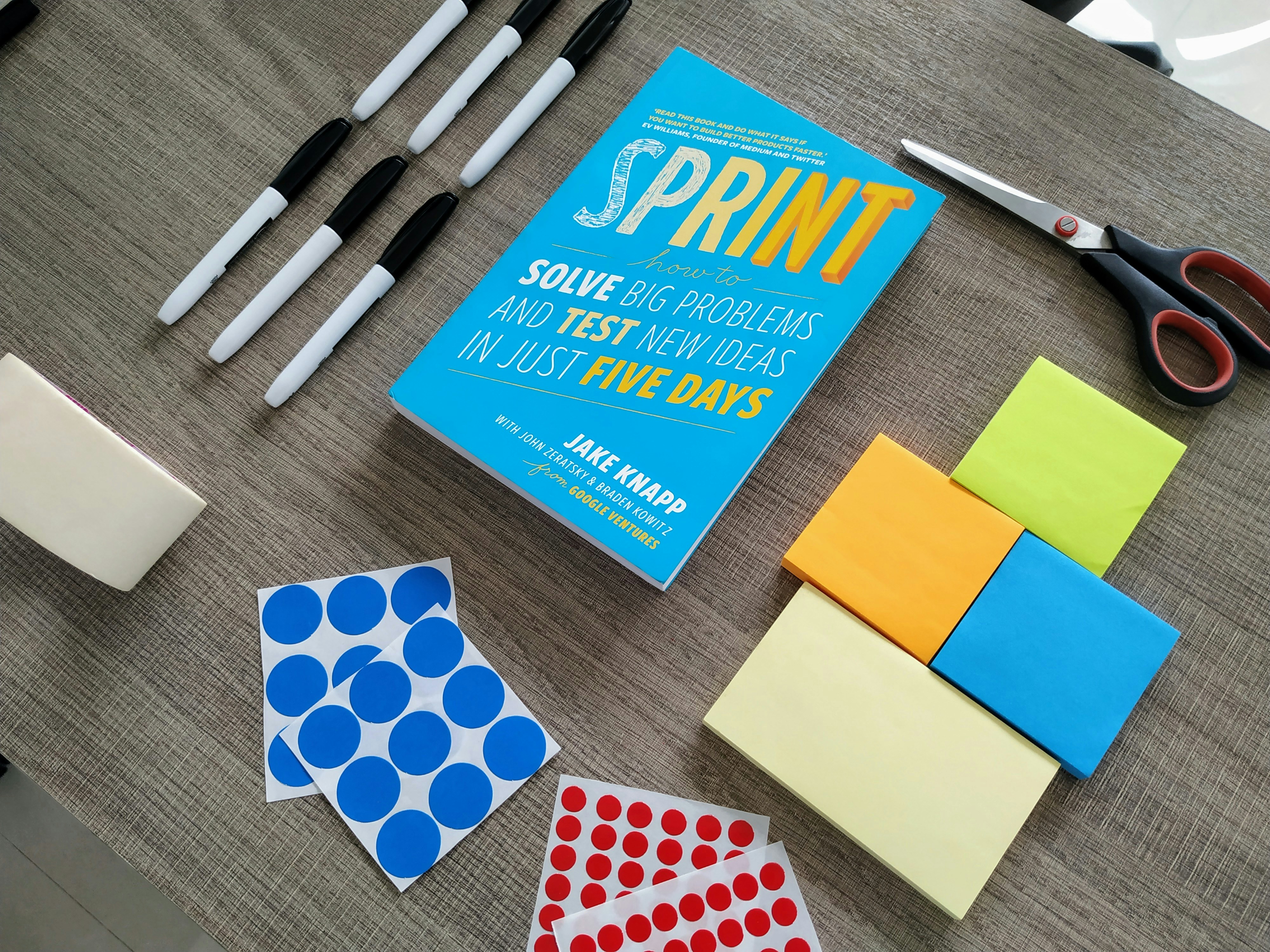
Sprint Highlights
After 5 days of workshops, of 3 hours each, these are the milestones we achieved as a team
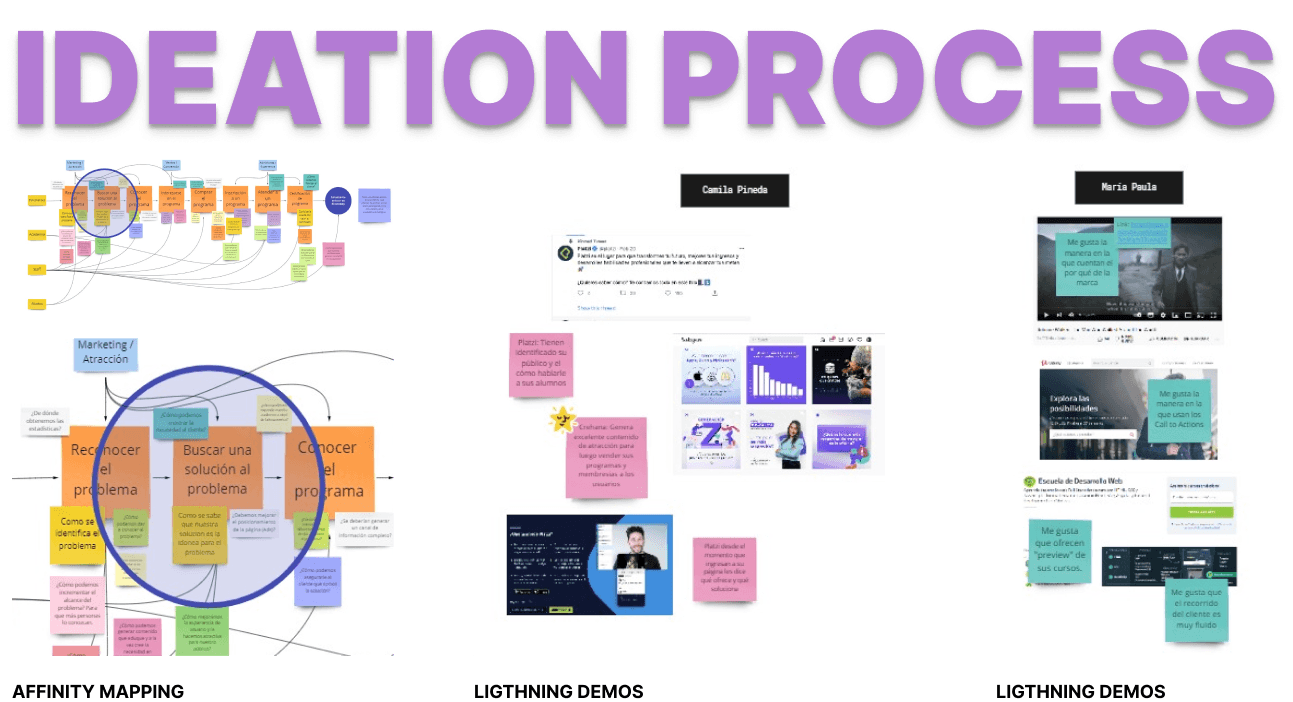
Metodologies we used:
How might we differentiate ourselves from the competition, without neglecting the quality of our product?
After a quick chat with the experts and discussions with each team member about possible issues they see and have experienced with the product, each person created their 'How Might We Questions' (HMWs). These questions were then sorted into themes (we managed to have a total of 11 different ones), and then we proceeded to take a vote on them, generating four (4) final questions.
Then each participant wrote their long-term goals, votes were taken, and a goal was established for discussion the following day at the mapping session.
Then we move on to the part that not everyone likes, the Sprint Questions, where it's time to get pessimistic and question everything.
What could go so wrong that it could ruin our 2-year goal?
From these discussions, we found several questions that gave us a better insight into the company's vision
01
02
03
04
Metodologies we used:
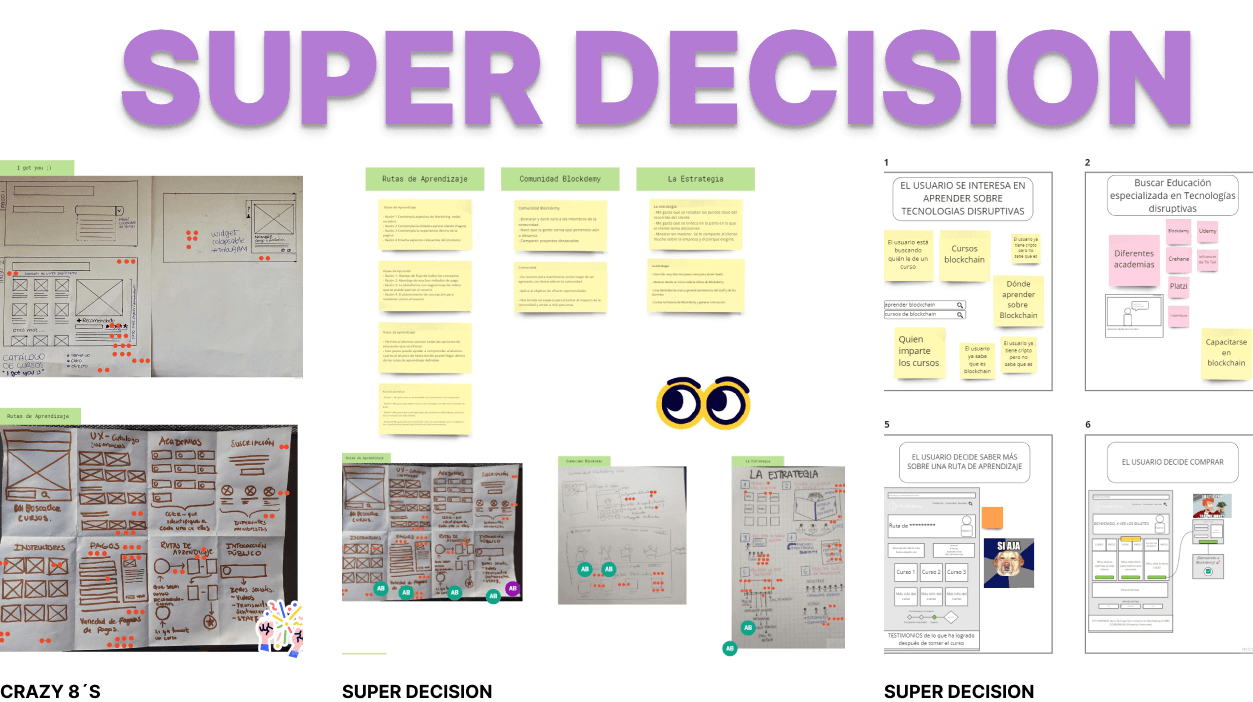
Decide
Metodologies we used:
- Taking notes and ideas
- Crazy 8's technique
- Sticky Decision
✅ Heat-map
Speed Critique
Straw Poll
Super Decision
- Storyboard
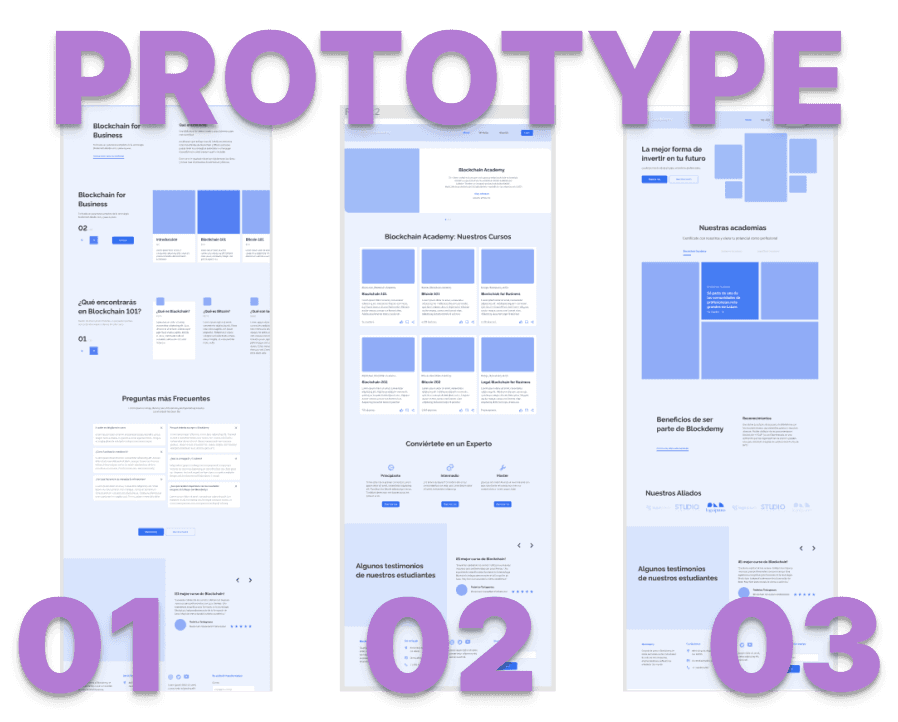
Prototype
Metodologies we used:
Metodologies we used:
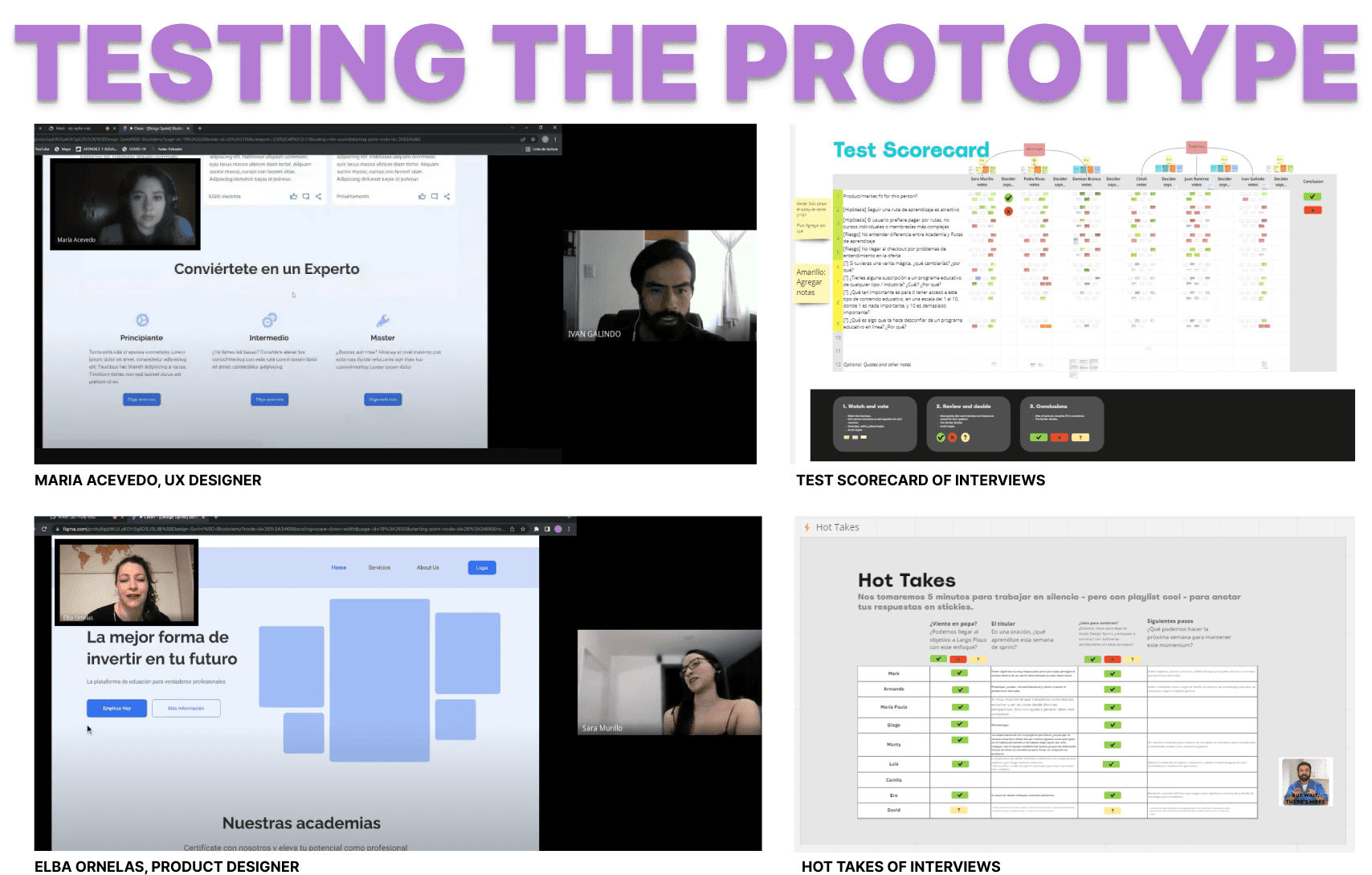
- Discussions on the strengths and weaknesses of the prototyped solution.
- Answering Sprint Questions.
- Planning Next Steps
- Sprint Scorecard
Sprint Recommendations
The Outcome. Some recommendations from the facilitators:
01
Going from Buyer Persona to Persona:
We (the facilitators) believe that the 'Persona' orientation should be focused not only from a marketing point of view but also from a product point of view.
While the main reason for creating a User Persona is to establish a sense of empathy between developers and end users, Buyer Personas are intended to help better understand user motivations.
02
Defining Brand Guidelines:
'Look and Feel' go hand in hand with the user experience. Working on this, not only will solidify their brand identity, but would also give it a "voice" for the user to feel familiar with the product whenever they have access
03
Following stages of the Sprint.
Prioritization requires teamwork, combining knowledge from different areas of the product along with new findings from the Design Sprint. For this experience to work on, they must open their minds to the perspectives of their colleagues, without forgetting the objectives set within the Sprint.