
API-First Loyalty Point Program' Software
LIKWID
Industry
Cryptocurrency
Product lead, PO, 2 Devs, 1 Product Designer
Product Designer
Context
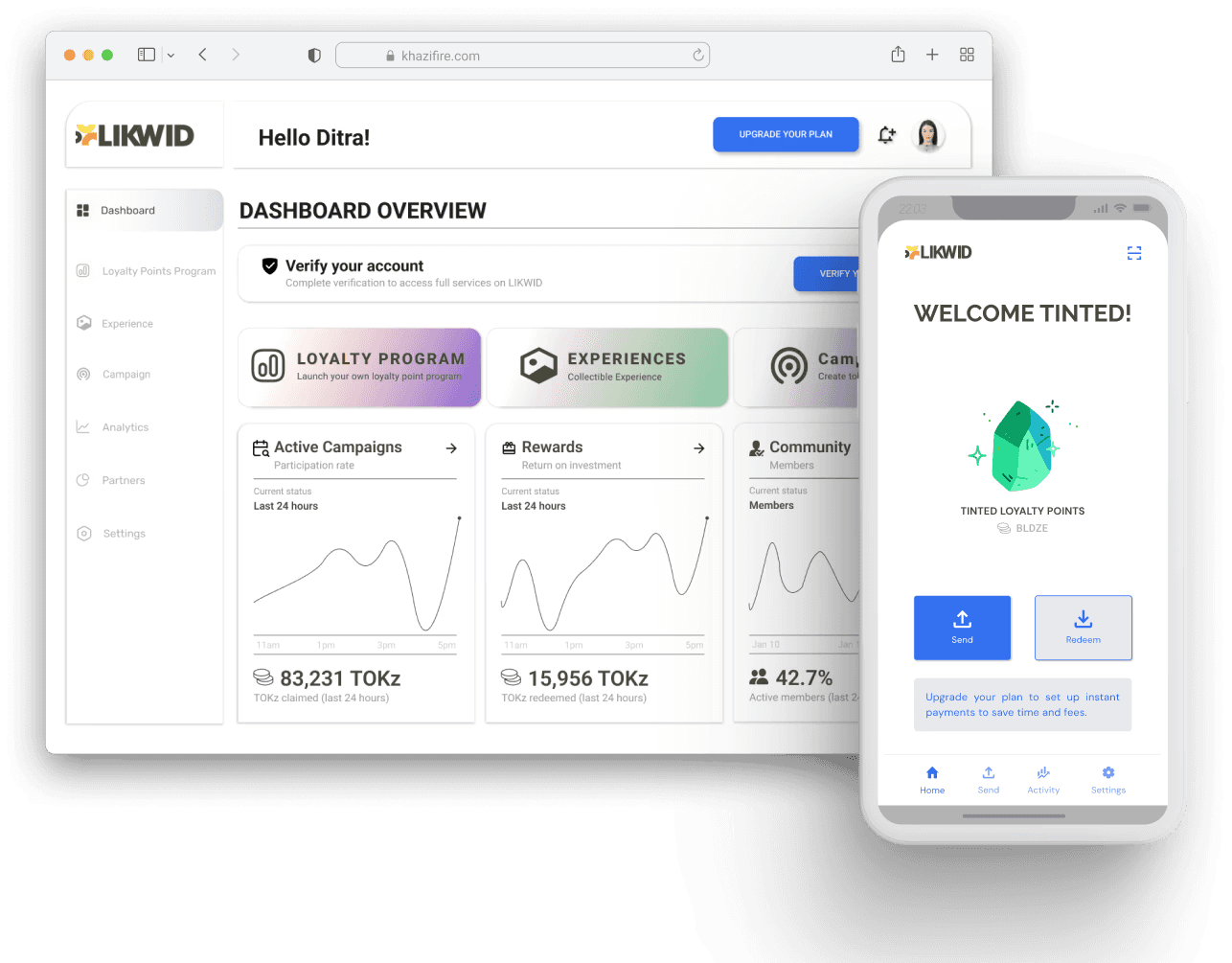
LIKWID stands out as a modern and flexible loyalty platform designed for seamless integration. It offers a user-friendly experience with complete adaptability, speed, and efficiency at every stage. Relying on a REST API, and complementing this is an Admin UI (Admin Panel). This platform offers access to member data, initiates targeted campaigns, and oversees rewards management. Brands can create loyalty programs, handle intricate loyalty modules, or enhance their SaaS products and mobile apps.
In a nutshell, LIKWID is an app for businesses that want to create and manage loyalty programs using secure blockchain technology. It helps keep customers engaged and coming back, which in turn helps the business grow. It's designed to be easy to use and customizable to fit the brand of any business.


To achieve the best user experience, I've defined the scope of the project by breaking it down into these stages of development:
Whether it's a tech startup founder or an established company with a new project, the goal of the planned digital product may be clear, but the specific features and requirements often are not. Our early discussions focused on refining the idea into a detailed list of functional and non-functional requirements, a broad plan for implementation, and ultimately, a final product.
With that foundation, we realized that defining the user types for LIKWID was crucial early in the product creation process. A significant part of our research targeted two distinct user groups: business owners and their buyers. My role included not only defining these users but also understanding how Loyalty Point Programs are used in our target sector, identifying the gaps our product would fill, and setting immediate design objectives.
To achieve this I conducted two rounds of interviews:
Stage 1.
Interview with Business Owners
The first round of interviews with business owners interested in loyalty programs revealed several key challenges. These include:
Clarifying business goals.
Designing an effective reward structure.
Creating strong incentives that drive buying behavior without reducing profit margins.
Incorporating gamification elements to enhance social identity and awareness.
Making it easy for customers to engage with the loyalty programs.
Conclusion
The StreamLine mobile banking app redesign successfully addressed the usability issues, resulting in a more intuitive and user-friendly experience. The improved UX/UI design led to increased user adoption, engagement, and satisfaction, demonstrating the value of a well-designed template for UX designers.